How to Get Out of a Lease in Alabama the Legal Way Without Breaking It
Trying to figure out how to get out of a lease in Alabama can feel urgent when rent is due, conditions are bad, or a job change forces a move. But Alabama does not give renters a general right to walk away just because the apartment no longer works for them.
The safest path is to use the lease, a written agreement, or a specific legal ground under Alabama lease termination law. Leaving without a legal reason can create risk for unpaid rent, damages, court costs, and attorney fees.

Read the lease first when deciding how to get out of a lease in Alabama
Start with the written lease before giving notice, moving out, or withholding rent. Many Alabama lease disputes turn on the exact words in the lease, not what the landlord or property manager said in a text or phone call.
Look for a buyout clause, early lease termination clause, military clause, sublet clause, assignment clause, and notice section. These provisions may explain how much notice is required, where notice must be sent, whether email counts, and whether a fee applies.
A buyout clause can be the cleanest option if it is affordable. It usually lets the tenant pay a set amount and leave on an agreed date, but the tenant must follow the clause exactly.
A sublet or assignment clause may help if the rental market is strong in Huntsville, Madison, or Birmingham. Some leases ban subletting without written consent, so do not assume a replacement renter solves the problem unless the lease and landlord allow it.
Negotiate a written mutual release
If the lease does not give a clear exit, ask the landlord for a written mutual release. This is a signed agreement that ends the lease on a specific date and states what each side still owes.
Do not rely on a verbal “OK” to move out. A handshake agreement can become a serious problem if management changes, the property is sold, or the landlord later claims rent is still due.
A useful release should identify the property, the move-out date, rent owed through that date, any agreed fee, the condition for returning keys, and what happens to the security deposit. Keep a signed copy with payment receipts and photos of the unit.
This option works best when the landlord can re-rent quickly or when the tenant offers a practical solution. For example, a tenant may propose a move-out date that gives the landlord access for showings, but the agreement should still be in writing.
End a month-to-month tenancy with written notice
Month-to-month renters have a different path than tenants locked into a fixed lease term. Alabama law gives a notice rule for periodic tenancies.
Ala. Code Sec. 35-9A-441 provides for 30 days written notice to terminate a month-to-month tenancy and 7 days written notice for a week-to-week tenancy.
That notice should be written, dated, and delivered in the way the lease requires. If the lease says notices must go to a specific address, use that address.
The notice should clearly state the last day of tenancy and that the tenant is terminating the month-to-month or week-to-week rental agreement. Keep proof of mailing, delivery, email transmission, or any other method allowed by the lease.
This is not the same as ending a one-year lease early. A fixed-term lease usually continues until the end date unless the lease or law provides another way out.

Use written notice when the landlord breaches the lease or law
A landlord’s serious breach may give a tenant a legal route for early lease termination, but the tenant usually must give written notice and a chance to cure. This is where careful wording matters.
Ala. Code Sec. 35-9A-401 allows a tenant to give written notice of the breach and state that the lease will end on a date not less than 14 days later if the breach is not cured.
The notice should describe the problem with enough detail that the landlord can understand what must be fixed. For example, “the bedroom ceiling has active water intrusion during rain” is better than “the house is bad.”
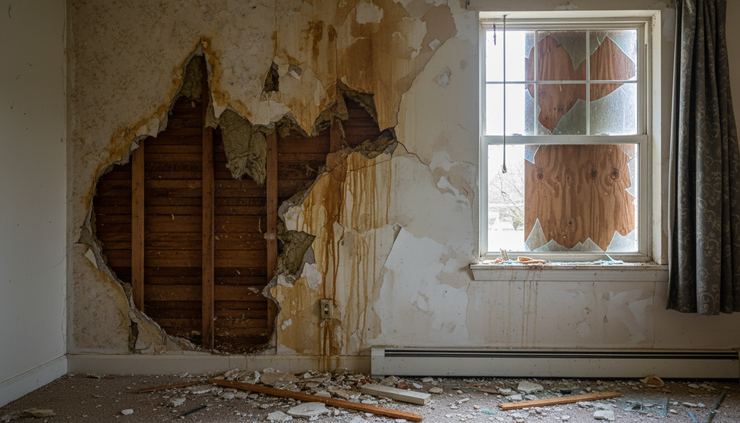
A tenant trying to get out of lease obligations because of bad conditions should document why the unit may be uninhabitable or why the landlord has failed to meet the lease or legal duties. Use photos, videos, repair requests, inspection notes, and dated communications.
Do not exaggerate. A weak or unclear notice can make the situation harder if the dispute reaches court.
Act quickly if there is no heat, water, hot water, or essential services
Some rental problems are more urgent than ordinary repairs. Loss of heat, running water, hot water, or other essential services can affect health, safety, and daily living.
Ala. Code Sec. 35-9A-404 addresses a landlord’s failure to provide heat, running water, hot water, electric, gas, or other essential services.
If essential services are missing, document when the problem started, when the landlord was notified, and how the lack of service affects the unit. Save outage notices, maintenance messages, photos of thermostats, and utility communications if available.
This statute is important, but it is not a free pass to simply abandon the property. The facts, the lease, and the timing of notice can all matter.
When the issue involves dangerous conditions, local code enforcement may also be relevant. For court forms and general court information, the Alabama court system website is available at <a href="https://alacourt.gov" target="_blank">alacourt.gov</a>.
Respond the right way to a lockout or utility shutoff
A landlord should not use self-help tactics to force a tenant out. Changing locks, removing access, or shutting off utilities can create a serious legal issue.
Ala. Code Sec. 35-9A-407 addresses a landlord’s unlawful removal or exclusion of the tenant, or willful interruption of essential services.
If this happens, create a written record right away. Note the date, time, who was present, what was said, and how access or utilities were affected.
Do not respond by damaging the property or escalating the confrontation. The stronger move is to preserve evidence, communicate in writing, and get legal advice quickly.
For help finding a lawyer, the Alabama State Bar provides public resources at <a href="https://www.alabar.org" target="_blank">alabar.org</a>. Renters with limited income may also contact Legal Services Alabama at <a href="https://legalservicesalabama.org" target="_blank">legalservicesalabama.org</a>.
Know your options after fire or casualty damage
A fire, severe storm, or other casualty can change the legal analysis. If the rental unit is damaged badly enough, the tenant may have rights under Alabama law.
Ala. Code Sec. 35-9A-406 addresses rental situations involving fire or casualty damage.
Take photos and videos before cleanup if it is safe to do so. Keep hotel receipts, insurance communications, fire reports, and messages with the landlord.
This area is fact-specific. A small repair issue is different from damage that prevents normal use of the dwelling, so it is wise to get legal guidance before declaring the lease over.
Use military lease termination rights for PCS or deployment
Military tenants may have federal protection when orders require a move or long deployment. This can apply in Alabama, including the Huntsville and Madison areas where many renters have military ties.
The Servicemembers Civil Relief Act, 50 U.S.C. Sec. 3955, provides military lease termination rights for a permanent change of station or deployment of 90 days or more.
This is commonly called SCRA lease termination. The tenant should provide written notice and a copy of qualifying military orders as required by the law.
Military lease termination is not the same as an informal request to be released. It is a statutory right, but the details still matter, including who signed the lease and how notice is delivered.
If the lease has a military clause, read it along with the SCRA. The federal protection may apply even if the lease language is narrower, but a lawyer can review the facts.
Plan for the security deposit after move-out - breaking the lease
Ending the lease does not end every money issue. The security deposit often becomes the next dispute.
Ala. Code Sec. 35-9A-201 provides a 60-day rule for return of the tenant’s security deposit.
Before moving out, clean the property, remove personal items, return all keys, and take detailed photos and videos. Capture floors, appliances, walls, bathrooms, closets, and any pre-existing damage.
Give the landlord a forwarding address in writing. Without clear written information, deposit disputes become harder to resolve.
The landlord may claim deductions for damage or unpaid amounts. Normal wear and tear is different from damage, but disputes often turn on proof.
Do not abandon the rental without a legal basis
Alabama renters rights are real, but they do not create a general right to walk away from a lease whenever life changes. A new job, roommate conflict, higher expenses, or buyer’s remorse usually does not end a fixed-term lease by itself.
Abandonment can expose a tenant to claims for unpaid rent, property damage, late fees, court costs, and attorney fees if the lease allows them. It can also affect rental history and make future housing harder.
Before deciding to Break lease obligations, compare the options that are actually available. The safest exit usually comes from the lease, a signed release, proper statutory notice, or a specific protection like the SCRA.
For the text of Alabama landlord-tenant statutes, use the official Code of Alabama resource at <a href="https://alison.legislature.state.al.us" target="_blank">alison.legislature.state.al.us</a>. Apex Law LLC also provides local guidance through our landlord-tenant page and contact page.

Frequently asked questions about ending an Alabama lease
Can I get out of an Alabama lease just because I want to move?
Usually, no. Alabama has no general right to walk away from a fixed-term lease without a legal reason, lease clause, or written agreement with the landlord.
How much notice is required for a month-to-month rental in Alabama?
Ala. Code Sec. 35-9A-441 provides for 30 days written notice for a month-to-month tenancy. The statute provides 7 days written notice for a week-to-week tenancy.
What if my landlord will not make serious repairs?
Ala. Code Sec. 35-9A-401 allows written notice of the breach. The notice can state that the lease will end on a date not less than 14 days out if the breach is not cured.
Can military orders end my lease in Alabama?
Yes, in qualifying cases. The SCRA, 50 U.S.C. Sec. 3955, provides lease termination rights for a permanent change of station or deployment of 90 days or more.
When should my Alabama security deposit be returned?
Ala. Code Sec. 35-9A-201 provides a 60-day rule for return of the security deposit. Give a forwarding address in writing and keep move-out photos.
Talk with a Huntsville landlord-tenant lawyer before you move
The best time to get advice is before sending notice or leaving the property. A short review can help confirm whether the lease, Alabama law, or federal military protections give a lawful path out.
Apex Law LLC in Huntsville helps tenants evaluate lease problems, written notices, and landlord disputes. Call (256) 203-3932 or visit our contact page to discuss the next step.
This article provides general information only. It is not legal advice, does not guarantee any outcome, and does not create an attorney-client relationship.


Comments